

The Quantum Computing Race: Who Will Win the Next Tech Revolution?
The global race to build practical quantum computers is reshaping technology, industry, and geopolitics—here’s who’s leading, what’s at stake, and why it matters.

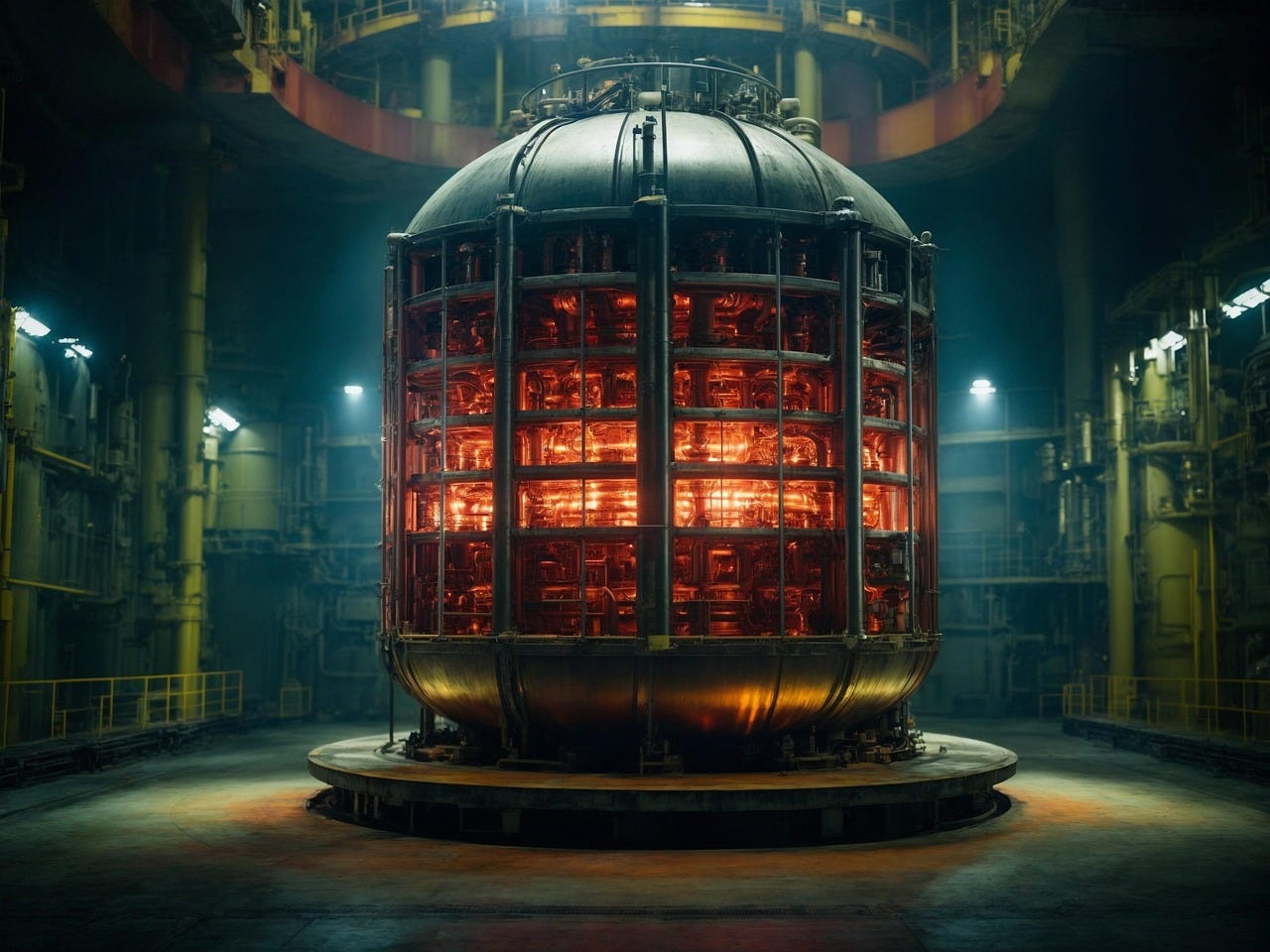
The Dawn of Quantum Supremacy
A new technological arms race is underway—one that promises to reshape everything from cryptography and pharmaceuticals to artificial intelligence and logistics. Quantum computing, once the stuff of theoretical physics and science fiction, is now a global pursuit attracting billions in investment and the brightest minds from Silicon Valley to Shanghai. The stakes are enormous: whoever cracks the code to practical, scalable quantum computers could gain a decisive edge in technology, security, and economic power for decades to come.
Historical Context: From Quantum Dreams to Quantum Devices
The roots of quantum computing stretch back to the early 20th century, when physicists like Schrödinger and Heisenberg first described the strange laws governing the subatomic world. But it wasn’t until the 1980s that the idea of harnessing quantum mechanics for computation took shape. In 1980, Paul Benioff proposed a quantum mechanical model of a Turing machine, laying the theoretical foundation for quantum computers. Richard Feynman, in 1982, famously argued that only a quantum computer could efficiently simulate quantum systems—a task that quickly becomes impossible for classical machines.
The 1990s brought a wave of breakthroughs: David Deutsch’s “universal quantum computer” concept (1985), Peter Shor’s algorithm (1994) for factoring large numbers exponentially faster than any classical method, and Lov Grover’s algorithm (1996) for speeding up unstructured searches. These theoretical advances proved that quantum computers could, in principle, outperform their classical counterparts for certain problems.
Experimental progress followed. In the late 1990s, researchers built the first small-scale quantum computers using nuclear magnetic resonance (NMR) and later, superconducting circuits. By 2011, Canadian company D-Wave launched the first commercially available quantum computer, signaling the start of a new era. In 2019, Google claimed to achieve “quantum supremacy,” performing a computation on a 54-qubit machine that would be unfeasible for any classical supercomputer. While the practical value of these early machines is still debated, the momentum is undeniable.
Quantum Computing, Explained: Why Qubits Are So Powerful
At the heart of quantum computing are qubits—quantum bits that, unlike classical bits, can exist in a superposition of 0 and 1 simultaneously. This property, combined with entanglement (where qubits become interdependent in ways impossible for classical bits), allows quantum computers to process vast amounts of information in parallel.
Imagine searching for a needle in a haystack. A classical computer checks each straw one by one. A quantum computer, leveraging superposition and entanglement, can check many straws at once, drastically reducing the time needed for certain problems. This is why quantum algorithms like Shor’s and Grover’s are so revolutionary: they promise exponential or quadratic speedups for tasks that underpin encryption, optimization, and more.
But quantum systems are fragile. Qubits are easily disturbed by their environment—a problem known as decoherence. Building machines that can maintain quantum states long enough to perform useful calculations, while correcting inevitable errors, is the central engineering challenge of the field.
Main Contenders: The Quantum Powerhouses
Private Companies
- IBM: A pioneer in superconducting qubits, IBM has made quantum computers available via the cloud and is pushing toward error-corrected, large-scale systems.
- Google: The most advanced company in this race, achieved the much-publicized “quantum supremacy” milestone and continues to invest heavily in scaling up qubit numbers and reducing error rates.
- D-Wave: Focuses on quantum annealing, a different approach optimized for certain types of optimization problems, and has sold commercial quantum systems since 2011.
- Microsoft: Betting on topological qubits, which promise greater stability but are technically challenging.
- IonQ, Rigetti, and Honeywell: Startups and spin-offs exploring trapped ion and superconducting architectures, each with unique advantages in coherence times and scalability.
Countries
- United States: Home to most leading companies and a robust ecosystem of government, academic, and private research.
- China: Investing billions in quantum research, with state-backed labs making rapid progress in both hardware and quantum communications.
- European Union: Germany, the Netherlands, and France are leading a coordinated effort, with significant funding for both research and industrial applications.
- Canada: Early leader thanks to D-Wave and strong university programs.
- Japan and South Korea: Investing in both hardware and quantum software, often in partnership with global tech giants.

Supply Chain and Manufacturing: The Quantum Bottleneck
Building a quantum computer is unlike assembling classical chips. The process requires:
- Exotic Materials: Superconducting qubits need ultra-pure metals and complex fabrication processes. Trapped ion systems rely on rare isotopes and precision lasers.
- Cryogenics: Many quantum computers must operate near absolute zero, demanding advanced refrigeration systems.
- Ultra-Clean Facilities: Even the tiniest impurity can disrupt quantum states, so manufacturing environments are among the most stringent in the tech world.
- Specialized Electronics: Control systems must generate ultra-precise pulses and read out delicate quantum signals, often at microwave frequencies.
This supply chain is fragile and highly specialized, with only a handful of companies worldwide capable of producing key components. As demand grows, bottlenecks in materials, cryogenics, and skilled labor could determine which countries and companies pull ahead.
The Quantum Future Is Up for Grabs
The race for quantum computing supremacy is far from over. While spectacular progress has been made, practical, error-corrected quantum computers remain on the horizon. The next breakthroughs will likely come from unexpected quarters—whether a new qubit technology, a leap in error correction, or a software breakthrough that unlocks new applications.
What’s clear is that quantum computing is no longer just a scientific curiosity. It’s a strategic technology, with governments and corporations alike vying for leadership. The winners will not only gain a technological edge, but also shape the future of cybersecurity, drug discovery, logistics, and beyond.
As the quantum era dawns, the world is watching—and the stakes couldn’t be higher.